
Social Media, Misinformation, and its Effects
By Giulia Paolino
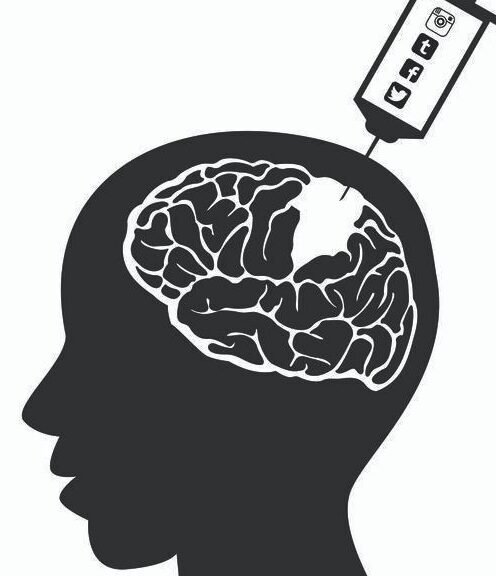
These past two weeks, I had the opportunity to study how social media is affecting our world for my digital design class. Firstly, I took a course to better understand how to spot misinformation online. I also did my own research and looked a little deeper into how AI is affecting content creation. Digital design as we know it is changing. The best thing to do now is to get ahead and understand the new technological advancements that AI offers and use them to your advantage.
The Power of Social Media
The course “How to Spot Misinformation Online” by Poynter taught me how dominant social media is, and how easy it is to be caught reading and spreading misinformation. Social media platforms are used all around the world, making everyone connected. While this can be a good thing, one must be diligent and know the risks that not everything you see online is true. Connections are made faster, which means that sometimes we don’t take the time to fact-check information before reposting, sharing, or liking it.
Using infographics for Visual aids On Social Media
Visual content is one of the most important aspects of social media. Infographics are able to combine both the visual aspect and well as overlay information to the reader. If done well, infographics help both attract and keep the attention of the reader. Infographics also make it easier to comprehend what they are reading, which in turn will make them remember it easier.
Catching the attention of your audience is the most important part when trying to get information across on social media. If someone is disinterested within the first three seconds of viewing a video or photo, they will scroll past. Infographics give short snippets of information to keep the reader’s short attention span engaged.
Identifying Misinformation
Knowing how to spot misinformation online is only the first step, and it’s not as easy as one may think. There are specific tools necessary to efficiently identify it. It is important to ask yourself these three questions when reading a piece of information: Who is behind the information? What is the evidence? What do other sources say? There are also aids like lateral reading, filtering searches, reading upstream, and reverse image searching that are taught in the Poynter course, all aimed at identifying misinformation. Overall, it all starts with the user and how they use social media.
Analyzing and Measuring Social Media Analytics
When studying social media analytics and analyzing how media is tracked and shared, I learned quite a few things. First, there are many different measures used to see how content impacts a person. Algorithms are responsible for studying each user and providing them with their own personalized content. Each like, share, or amount of time spent on a video is monitored. It is important that when scrolling, one stays aware, because a platform may be feeding you what you want to see or hear rather than the truth. Over time, data is stored, and by analyzing it, we understand what types of content reach a certain demographic of people or when and where to post to get the most visibility.
Consider, however, that just because something is viral, it does not mean it is the truth. Information spreads fast, and people are extremely vulnerable when receiving information online.
Conclusion
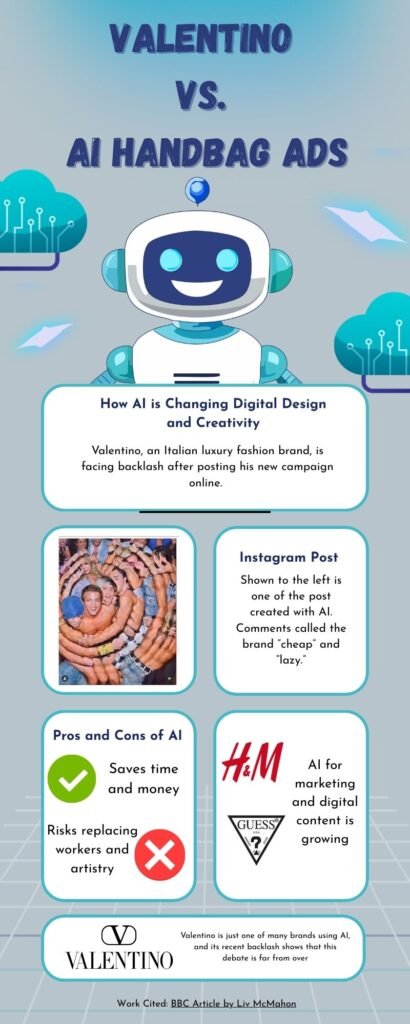
Overall, as a media student, it is important to research properly before sharing any media, as well as be actively conscious when scrolling online. Below, I have shared an infographic I made when researching AI-generated content. It ties in nicely because it highlights what I learned above about infographics, as well as sharing a current event that supports the topic of technology and media.
Links & Sources:
Fashion house Valentino criticised over ‘disturbing’ AI handbag ads